Our Recommendations

From Administrative Compliance to Human Recovery

Ten practical reforms drawn from the Victorian Workers’ Compensation Psychosocial Hazard paper.
Our Recommendations

From Administrative Compliance to Human Recovery

“Stop measuring claims management solely by administrative compliance. Measure it by its impact on human recovery.”

01

Systemic Hazard Assessment

Assess the claims system itself as a potential source of psychosocial hazard, not only the workplace where the injury occurred.
02

Funded Peer Support

Fund lived-experience peer support so injured workers are not left to navigate a complex process alone.
03

Independent Advocacy

Provide free independent advocacy so workers can understand their rights and participate safely in the process.

04

IME Representation

Allow injured workers to be accompanied and supported at independent medical examinations.
05

Psychological Safety KPIs

Measure claims management against psychological safety outcomes, not administrative compliance alone.
06

Transparent Dispute Data

Publish dispute volumes, timeframes and outcomes so the real experience of the system is visible.
07

Measure the Cost of Delay

Quantify what delay costs in human, clinical and financial terms so it can be reduced.

08

Agent Accountability Standards

Set enforceable standards for the conduct of claims agents, with consequences when they are not met.
09

Enforceable Claimants' Rights

Give injured workers rights that can actually be enforced, not statements of intent.
10

Psychosocial Hazard Reporting

Require ongoing public reporting of psychosocial hazards arising within the compensation system.

The ten recommendations set out in the Victorian Workers’ Compensation Psychosocial Hazard paper.

Independent Peer Support

No injured worker should walk alone.

Independent peer support is not a substitute for treatment or legal advice. It is the presence of someone who has been through the process and can help a worker stay informed, prepared and involved.
94%

of respondents stated that free independent advocacy would have helped them navigate the system safely.

Workers’ Voice Project — client supplied image.
Parliament of Victoria

Petition No. 715

A Trauma-Informed, Publicly Managed Workers’ Compensation System for Victoria
Legislative Council Petition No. 715 asks Parliament to look past the question of whether legislation exists. IWST’s formal rebuttal to the Minister’s response makes the same argument: the test of a compensation system is not the presence of rules, but whether it delivers fair, safe and trauma-informed outcomes for the injured workers who depend on it.
[Document link to be supplied by the client]

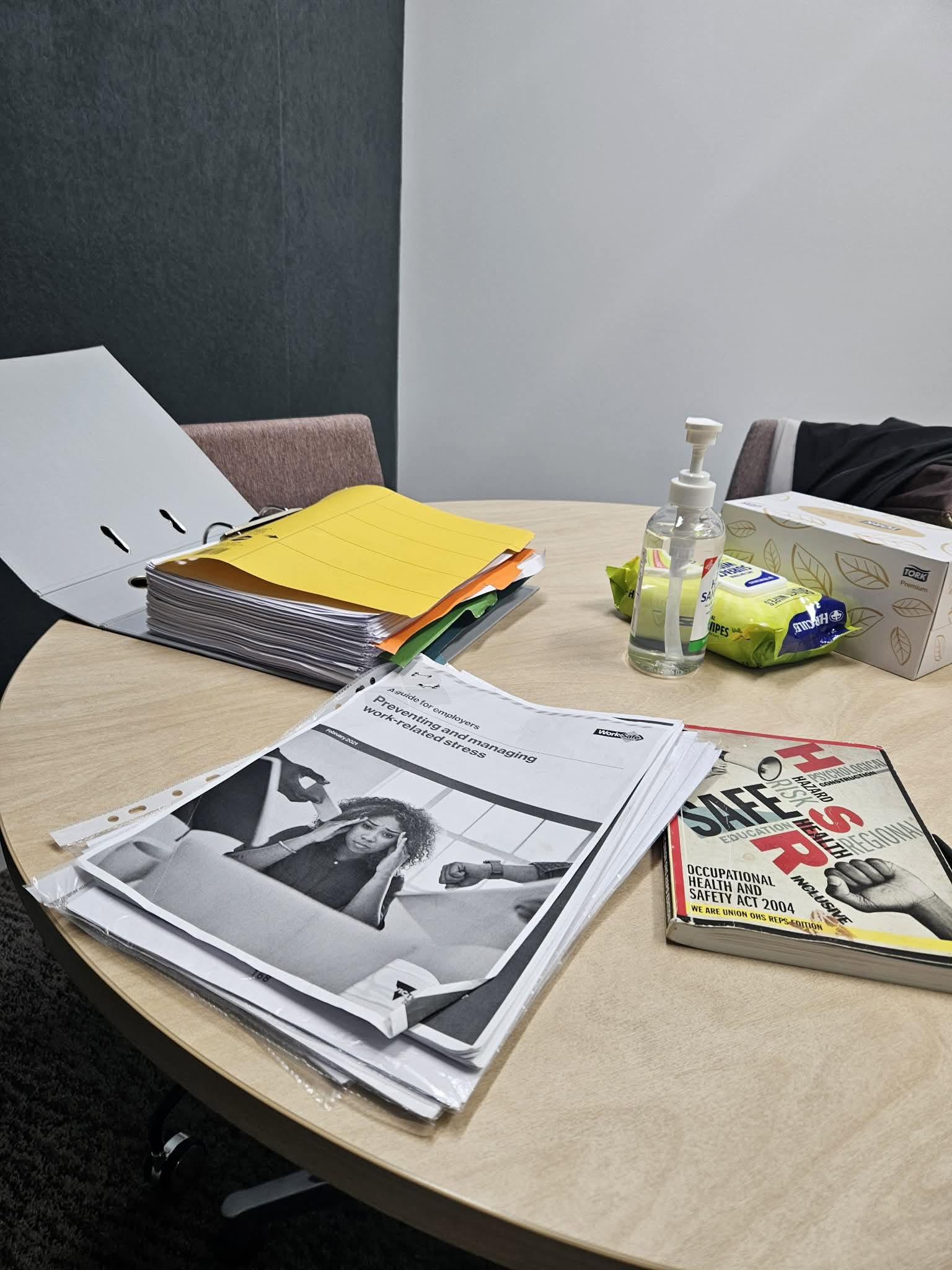
The harm no one sees is real.

It’s time the system finally saw it.