
Victorian Workers’ Compensation

Standing Beside Injured Workers. Driving Real Systemic Reform

Founded by volunteers in 2021, the Injured Worker Support Team (IWST) ensures no worker navigates the compensation system alone.

When a workplace injury occurs, accessing medical treatment and income support shouldn’t come with administrative warfare. IWST provides lived-experience peer support and independent advocacy to guide workers through complex claims, Independent Medical Examinations (IMEs), and dispute conciliations. Beyond individual support, we leverage real worker experiences to hold insurers accountable and push Parliament for a trauma-informed, publicly managed compensation system.

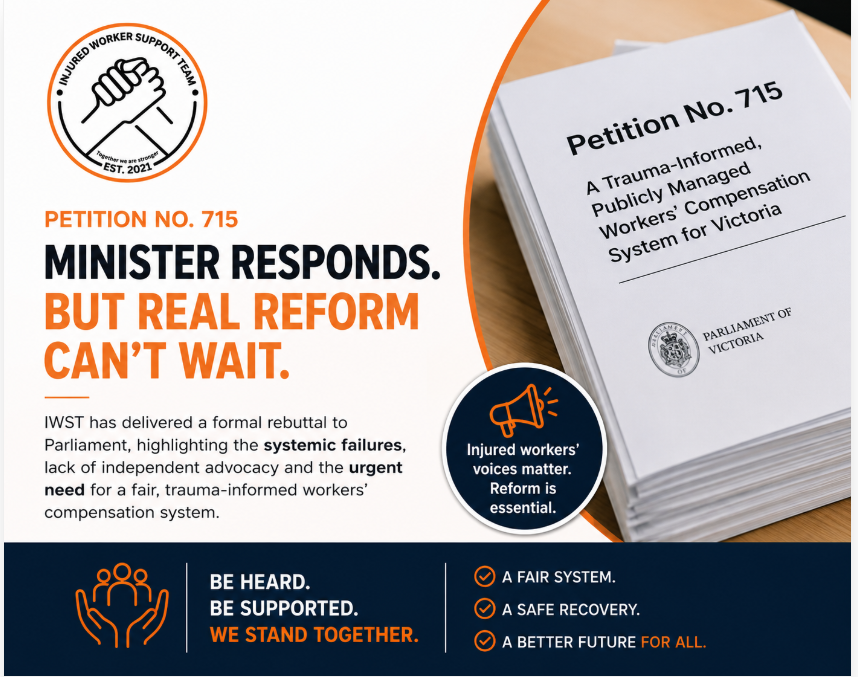
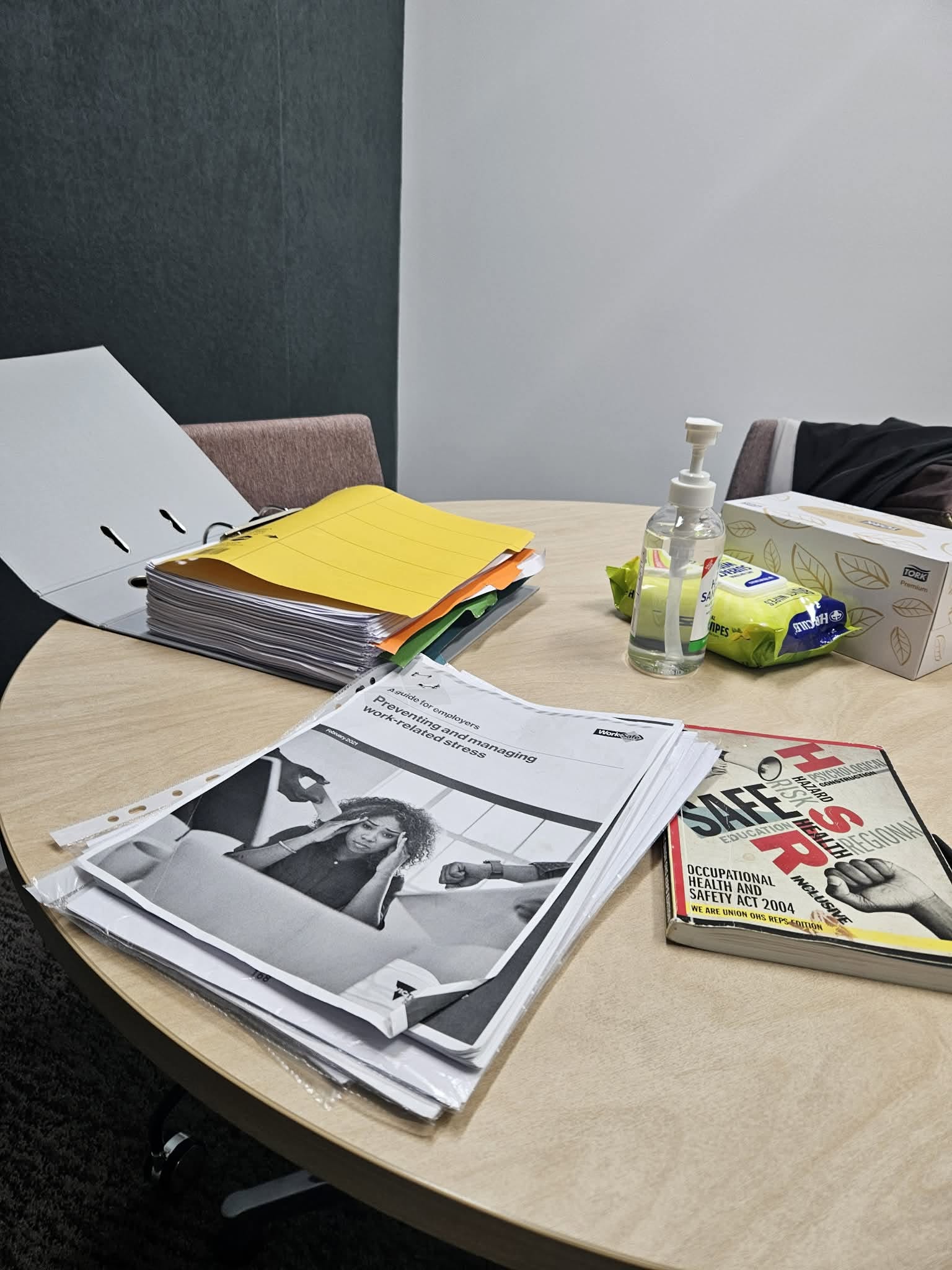
IWST campaign material — Petition No. 715, Parliament of Victoria.

Latest News

Stay informed about the latest developments, announcements and issues affecting injured workers across Victoria.
WHAT WE DO

We Expose and Eliminate System-Induced Harm

Navigating a compensation claim shouldn’t cause a secondary injury. We fight to make invisible administrative hazards visible

While physical injuries are documented on medical scans, the mental toll of delayed approvals, income interruptions, and endless scrutiny often goes unrecorded. IWST actively maps and exposes this cycle of administrative harm across every stage of the claims process—from initial lodging to dispute resolution. By identifying these systemic psychosocial hazards, our team advocates directly with regulators to protect workers’ psychological safety while they heal.

WHO WE ARE

Our Wins (Advocacy in Action) Real Results. Enforceable Rights.

See how IWST’s grassroots advocacy is changing lives and shifting policy across Victoria.

Behind every systemic policy shift is a real worker who stood up for their rights. At IWST, we don’t just point out problems—we fight for solutions. Through direct advocacy at conciliations, representation at Independent Medical Examinations (IMEs), and legislative campaigns, our volunteer-led team delivers tangible victories for injured workers every day.

WHAT WE DO

We Expose and Eliminate System-Induced Harm

Navigating a compensation claim shouldn't cause a secondary injury. We fight to make invisible administrative hazards visible.

ADVOCACY

Challenging the Four Pillars of Claims Failure

Challenging the Four Pillars of Claims Failure

We demand clear communication, dignity, active participation, and financial stability for every worker.

Resources

10 Concrete Steps to Fix Victorian Workers' Compensation

Practical, actionable solutions crafted by advocates and lived-experience experts

IWST has laid out ten enforceable reforms to rebuild the system around human care:

01

Psychosocial Hazard Assessments

Mandate systemic psychosocial hazard assessments for claim administration.
02

Independent Peer Support

Permanently fund independent, lived-experience peer support.

THE EVIDENCE

Lived Experience Driven by Data and Real Results

We turn worker stories into undeniable evidence for legal and legislative reform.
Our advocacy is backed by direct data from over 300 injured workers across Victoria. The statistics are clear: 85% experience worsening mental health during their claim, and 94% confirm that free independent advocacy is critical to navigating the system safely. IWST collects, analyses, and presents this evidence to parliamentary inquiries and decision-makers to prove that systemic change isn’t optional—it’s urgent.

300+

Injured workers surveyed across Victoria

85%

Reported worsening mental health during their claim

94%

Called for free independent support

88%

did not feel treated with dignity and respect.

76%

reported communication failures.

88%

felt uninvolved in treatment and return-to-work decisions.

94%

said free independent advocacy would have helped them navigate the system safely.

Numbers describing something that is rarely counted.

IWST collects, analyses, and presents worker experiences to parliamentary inquiries and decision-makers to demonstrate that systemic change isn’t optional—it’s urgent.

GET INVOLVED

Real Results. Enforceable Rights.

An injured worker enters the compensation system needing treatment, income and time to heal. What many describe instead is a second experience running alongside the first: poor communication, uncertainty about entitlements, repeated administrative and medical demands, and decisions made about them without them.

Behind every systemic policy shift is a real worker who stood up for their rights. At IWST, we don’t just point out problems—we fight for solutions. Through direct advocacy at conciliations, representation at Independent Medical Examinations (IMEs), and legislative campaigns, our volunteer-led team delivers tangible victories for injured workers every day.

Successful Advocacy

Short description of the actual win.

IME Support

Short description of the actual result.

Policy Change

Short description of the actual systemic result.

The Claims Journey

Every stage has a purpose. Every stage has an exposure.

The compensation process is designed to move a worker from injury back to work. Each step also carries a potential psychosocial exposure when it does not work as intended.

01

Workplace Injury

An injury or illness occurs at work and is reported.
Potential psychosocial exposure
Shock, uncertainty about what happens next, and concern about how the report will be received.

02

Claim Submission

The worker lodges a claim to access treatment and income support.

Potential psychosocial exposure
Complex paperwork, unclear expectations and anxiety while waiting for a decision.

03

Review & Assessment

The claim is assessed and entitlements are determined.
Potential psychosocial exposure
Repeated administrative and medical demands, examinations, and a sense of being scrutinised.

04

Support & Rehabilitation

Treatment and rehabilitation support recovery.
Potential psychosocial exposure
Delayed approvals for treatment and limited involvement in decisions about care.

05

Dispute Resolution

Disagreements about entitlement or treatment are resolved.
Potential psychosocial exposure
Prolonged disputes, adversarial processes and financial insecurity while matters remain unresolved.

06

Recovery / Secondary Harm

The worker recovers from the original injury.
Potential psychosocial exposure
Psychological burden accumulated through the process itself, separate from the original injury.

07

Reintegration

Return to work and to ordinary life.
Potential psychosocial exposure
Loss of confidence, strained workplace relationships and ongoing employment or financial pressure.

A Framework, Not a Finding

The Cycle of Administrative Harm

One pressure feeds the next. This sequence describes how exposure inside the system can compound over the life of a claim.

1

Workplace injury or illness

2

Claim submitted

3

Uncertainty about entitlement or treatment

4

Repeated administrative and medical demands

5

Poor communication or delayed decisions

6

Loss of control and participation

7

Financial, employment or housing pressure

8

Psychological deterioration

9

More complex treatment and extended recovery

10

Further disputes and escalation

This is a framework for understanding and testing the relationship between system exposure and outcomes. It is not proof of causation. It is offered as a model that policymakers, regulators and researchers can examine, measure and test against real claims data.

Independent Peer Support

No Injured Worker Should Navigate the System Alone

IWST provides free independent peer support and advocacy to help injured workers understand their rights, navigate complex claims, and face difficult processes with greater confidence.

94%

of respondents stated that free independent advocacy would have helped them navigate the system safely.

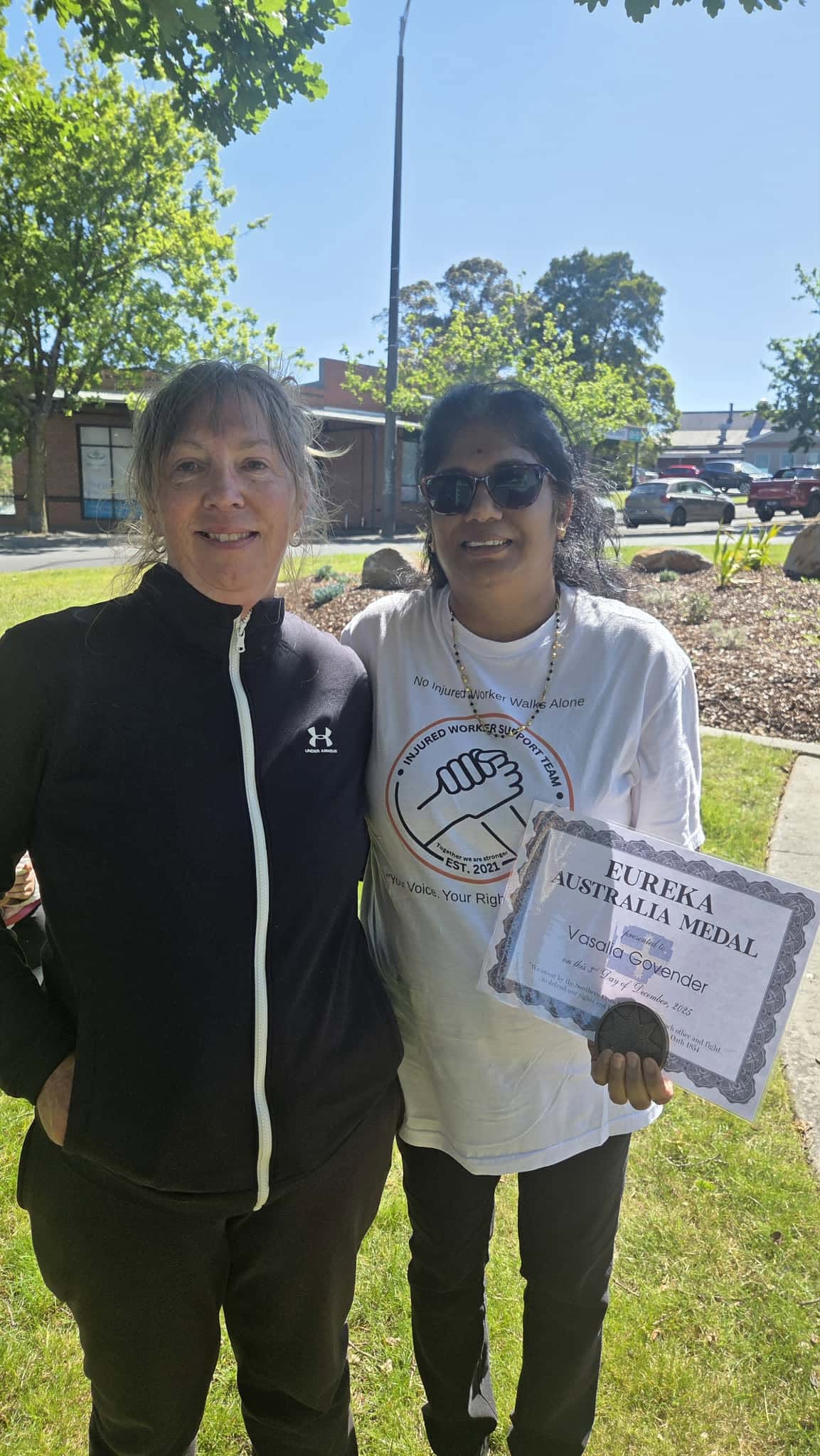
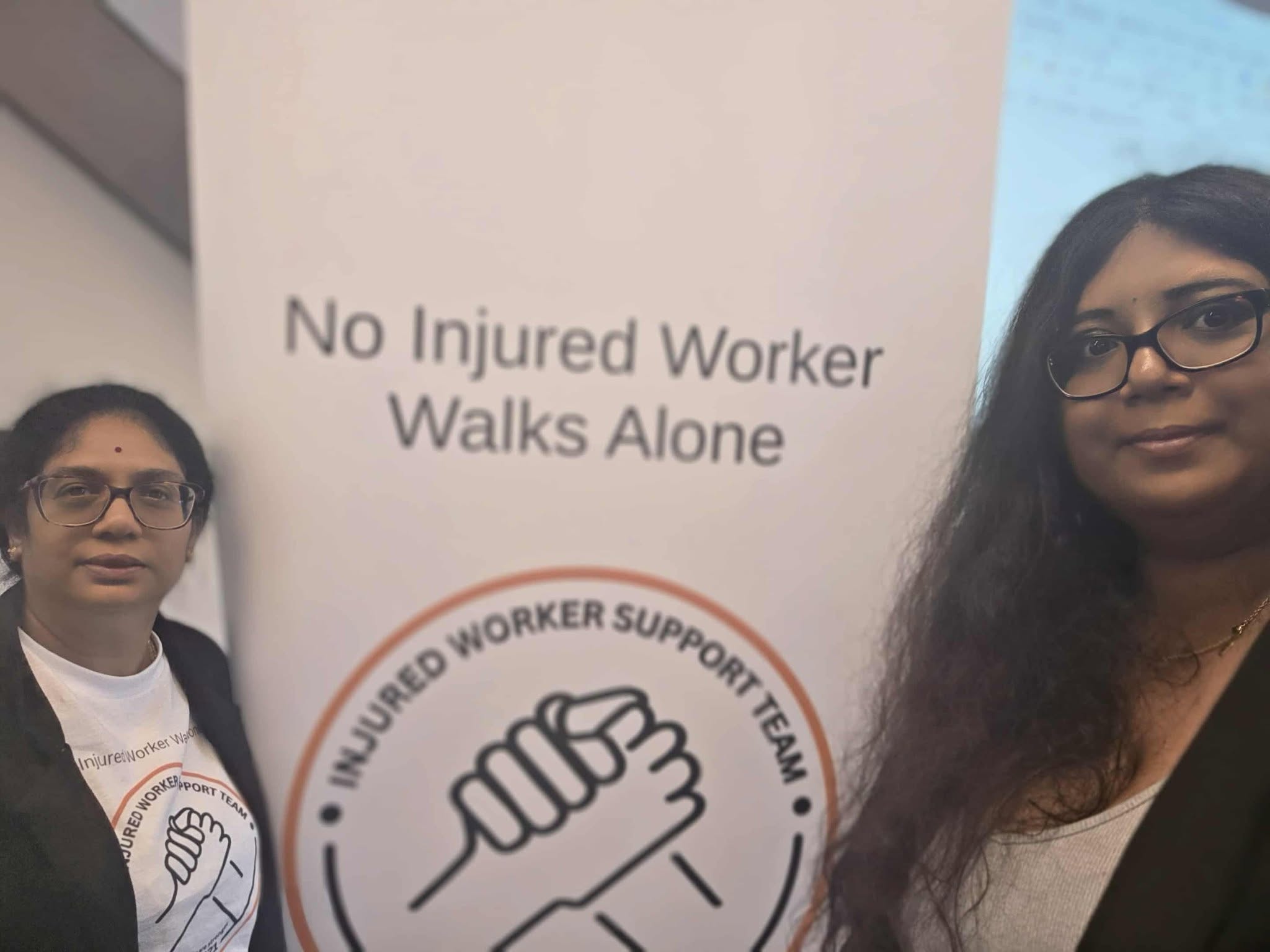
Workers’ Voice Project — client supplied image.
Parliament of Victoria

A Parliamentary Push for Meaningful Reform

IWST is using lived experience and worker advocacy to push for meaningful reform of Victoria’s workers’ compensation system.
Legislative Council Petition No. 715 asks Parliament to look past the question of whether legislation exists. IWST’s formal rebuttal to the Minister’s response makes the same argument: the test of a compensation system is not the presence of rules, but whether it delivers fair, safe and trauma-informed outcomes for the injured workers who depend on it.
[Document link to be supplied by the client]

GET INVOLVED

In Their Words: The Voices Behind the Claims

Real stories from Victorian workers who navigated the system, fought for dignity, and found support.

The Harm No One Sees Is Real.

Every injured worker deserves dignity, support, and a fair path to recovery.